
By Kalvin BrookesMoin Hamburg Tours
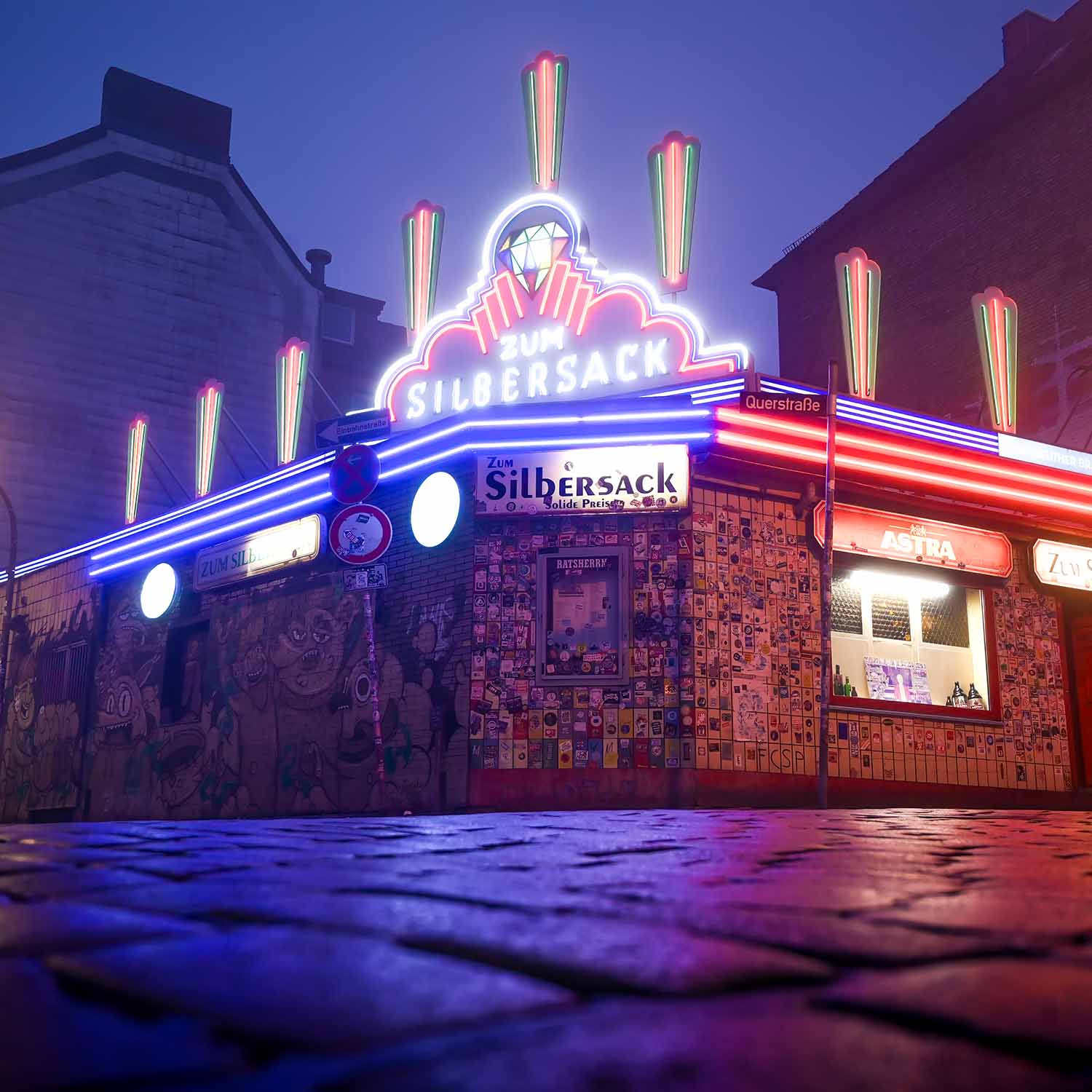
St. Pauli is the Hamburg district most visitors think they already understand. Neon. Clubs. The Reeperbahn after dark. That picture is incomplete. Long before the strip lights, this was a harbour neighbourhood: rope-makers, sailors, and working people who shaped their own culture of tolerance and free expression. It is also where four young men from Liverpool spent August to December 1960 learning to become the Beatles.
This guide covers the real St. Pauli story, what the Beatles actually did here, what you can see on foot in daylight, and when you might enjoy joining a guided St. Pauli & Reeperbahn tour instead of piecing it together from a nightlife map alone.
What St. Pauli actually is
St. Pauli sits west of the old city, hard against the Elbe and the Landungsbrücken. In the 19th century it was a working harbour quarter: crews, dock labour, taverns, and housing that followed the port. The neighbourhood's character (independent, rough-edged, tolerant, creative) came from that harbour economy and from people taking their lives into their own hands, not from tourism.
FC St. Pauli later made the district famous for a football club with a clear political identity (anti-fascist, anti-racist, anti-homophobic), but the deeper layer is older: a port community that entertained sailors, protected outsiders, and kept reinventing itself.
If you only see St. Pauli at midnight, you miss the church above the harbour near Park Fiction, the Davidwache, the side streets off Große Freiheit, and the harbour edge two minutes from Spielbudenplatz. Daylight is when the neighbourhood reads as a place people live and work, not only a stage set.
Why the Reeperbahn is called the Reeperbahn
Reeperbahn means roper's track. Hamburg's rope-makers needed a long, straight stretch to lay and twist the miles of rigging ships required. The industry drew workers, housing, and taverns. Entertainment venues followed later. The neon did not invent the street; it arrived after the rope.
That sequence matters. The rope-makers were not only an industry footnote. They stand for a working-class street that made its own rules of community, humour, and survival. A useful walk starts there, then moves into music, football, and the entertainment layer.
Große Freiheit: named for a liberal past
Große Freiheit ("Great Freedom") is an allusion to the earlier Danish rule over this part of Hamburg. The name points to the comparatively liberal attitudes associated with that period, not to a modern marketing slogan.
That memory of openness still sits in the street. Churches, businesses, and later entertainment found room to operate here in ways that felt freer than the stricter old city next door. The Indra and the Kaiserkeller on Große Freiheit belong to that longer story of experiment and expression.
The Beatles in Hamburg: Indra, then Kaiserkeller
The Beatles' Hamburg chapter runs from August to December 1960. They began at the Indra on Große Freiheit, then moved to the Kaiserkeller, where they played from October to December 1960 (98 nights in that Kaiserkeller stretch). Sets ran for hours. The audience was often sailors and night workers, not a polite pop crowd.
This is the residency many US visitors come to Hamburg to stand inside: long hours, hard rooms, a band learning to hold a stage before anyone had heard of Beatlemania. Use the accurate timeline: Indra from August, Kaiserkeller October–December 1960. Avoid inflated "first 100 gigs" versions.
Why not join a short walk and hear that chapter on the street where it happened? Plaques help; a guide who can place Indra, Kaiserkeller, and the harbour around them helps more.
What to see on a self-guided daylight walk
You can cover a useful slice of St. Pauli without a ticket. Plan 1.5–2 hours, start earlier rather than later, and keep expectations historical rather than theatrical.
Start at Landungsbrücken / Pegelturm. The harbour edge reminds you this district faces the Elbe first. Many guided groups meet here for that reason.
Optional: Alter Elbtunnel. A few minutes from Landungsbrücken, the old Elbe tunnel is one of Hamburg's great simple attractions: tiled pedestrian and bike tubes under the river, opened in 1911. Worth the detour if you have time before or after the neighbourhood walk.
Fischmarkt between harbour and strip. The Hamburg Fish Market (Fischmarkt) sits neatly between Landungsbrücken and the Reeperbahn. Sunday mornings it is a full spectacle; other times the buildings and waterfront still mark the working harbour edge. It slots naturally into a daylight route.
Walk toward the Reeperbahn with the rope story in mind. Notice how the main strip sits in a wider grid of ordinary streets. Festival weeks and Saturday nights change the volume; mornings show the working quarter.
Große Freiheit: Indra and Kaiserkeller. Stand on the street where the 1960 residencies happened. You are locating a cellar chapter in a harbour neighbourhood, not a theme-park reconstruction.
St. Pauli church, Park Fiction, and the Davidwache. The church sits above the harbour close to Park Fiction. The Davidwache has watched this corner longer than most clubs have existed. Both pull the walk back toward civic life and local creativity.
Optional Millerntor. FC St. Pauli's ground is part of the modern identity of the district. Even a short look from outside helps if football culture is part of why you came.
Practical watch-outs
- Time of day: late evening is louder and easier to misread. Morning or afternoon suits a history walk.
- Glass ban: between 22:00 and 06:00, glass bottles and other glass containers are prohibited on and around the Reeperbahn. Fines are steep. Use cans or drink inside venues.
- Crowds: Reeperbahn Festival weeks and weekend nights pack Spielbudenplatz. Side streets stay more readable.
- Street solicitation: parts of St. Pauli include legal sex work. Some workers can be assertive when approaching single men on the street, especially after dark. It is their workplace; stay polite, decline clearly if you are not interested, and keep walking. Travelling with company reduces how often you are stopped.
- Venues cost extra: club entries, museum tickets, and drinks are separate. A walking tour does not include them.
- Framing: adult entertainment streets exist here. A historical walk treats them as one layer of the neighbourhood, not the whole story.
St. Pauli vs Old Town: which first?
If you have one guided walk on a first visit, start with the Old Town walking tour. It gives the chronological frame: Hanseatic trade, the Great Fire of 1842, Rathaus, wartime rebuilding. About 2.5 hours, max 15 people, around €30 from Rathausmarkt.
Choose St. Pauli second when you already understand central Hamburg and want harbour culture, Reeperbahn origins, and the Beatles chapter in one focused 2-hour walk. That is what the St. Pauli & Reeperbahn tour is built for. It is not a nightlife crawl with a guide attached.
Doing Old Town and St. Pauli as full guided tours on the same day usually feels rushed. Day one Old Town, day two St. Pauli (or Speicherstadt) is the combination that works. See also our Hamburg in 2 days itinerary if you are building a weekend.
When a guided St. Pauli tour is worth it
Many guests, especially from the US, come to Hamburg with one clear question: where did the Beatles play, and what was that world like? A self-guided loop can find Große Freiheit. A guide can connect Indra, Kaiserkeller, the harbour audience, and the months of August–December 1960 into a story you can walk.
Beyond the Beatles, the same walk opens:
- How rope-making produced the Reeperbahn
- Why Große Freiheit carries a Danish-liberal "freedom" memory
- How harbour labour, churches, Park Fiction, police, and football sit beside the entertainment strip
Why not join us for a couple of hours and hear it on the ground? Moin Hamburg Tours runs join-in St. Pauli walks at about €30 per person, max 15 (usually 6–8), meeting at the Pegelturm, Landungsbrücken. Free cancellation up to 24 hours before. Languages: English, German, Spanish, one language per departure. The route is historical and cultural, not a pub crawl.
Same-day spots sometimes appear on the live calendar; book ahead when festivals or weekends fill the district.
Private option for groups
If you are six or more, need a flexible start time (cruise arrival, conference gap), or want a fully customisable route (Beatles-heavy, harbour-heavy, combined with Old Town or Speicherstadt), compare join-in tickets with a private tour in Hamburg from €250 for up to 10 people. Private means your clock and your map, not a VIP version of the same join-in script.
Bottom line
St. Pauli is not only rope and neon. It is a working-class neighbourhood that learned empowerment, tolerance, free expression, creativity, and a stubborn kind of humanity, from the rope-makers on the Reeperbahn to the Beatles in a cellar on Große Freiheit. Walk it in daylight if you want the streets; join the St. Pauli & Reeperbahn tour if you want that story told beside Indra and Kaiserkeller. Pair it with an Old Town walk on another day, or go private if your group needs a custom route.
See today's departures or the St. Pauli tour page for live availability.
PLAN YOUR VISIT
See Hamburg with a local guide
Small-group walking tours in English, German and Spanish — Old Town, St. Pauli, and Speicherstadt.
See our tours →