
By Kalvin BrookesMoin Hamburg Tours
The Speicherstadt is the part of Hamburg that looks most like a film set: red-brick warehouses, narrow canals, iron bridges, and the Elbphilharmonie rising at the edge. It is also one of the easiest districts to misunderstand. A pretty waterfront walk without the free-port story, the customs border, and the logistics system is mostly wallpaper.
This guide covers what the Speicherstadt is, why it became UNESCO World Heritage in 2015, what to see on foot, and when a guided Speicherstadt tour is worth booking instead of wandering alone.
What the Speicherstadt actually is
The Speicherstadt is the world's largest historic warehouse complex, built between 1883 and 1927 on oak piles driven into the Elbe riverbed. At its peak it stored coffee, tea, spices, cocoa, tobacco, and carpets from every continent. The red-brick Gothic Revival style was deliberate: Hamburg wanted its warehouse city to look like a merchant republic, not an industrial yard.
The district sits on islands and peninsulas in the port, threaded with canals so barges could unload goods directly into the warehouses from below. Warehouse floors were numbered from the bottom up, with the heaviest goods on the lowest levels. That is not decorative architecture. It is a logistics machine.
Since 2015, the Speicherstadt has been UNESCO World Heritage, listed together with the Kontorhaus district (Chilehaus and neighbours). The designation covers the warehouse ensemble and the office-building quarter that financed Hamburg's global trade.
Why it exists: the free port in one paragraph
Hamburg joined the German Customs Union in 1881, but negotiated a small excluded zone where goods could be stored without paying customs duties until they moved on. The Speicherstadt was built to exploit that single legal exception. The entire district is, in effect, a customs machine dressed as a cityscape.
That status ended in 2013, when the free port was dissolved. Warehouses no longer store bulk goods. From the outside the district still looks preserved; inside, many buildings are offices, museums, agencies, and restaurants. The shell stayed; the function changed.
What to see on a self-guided walk
You can explore a useful slice of the Speicherstadt without a ticket. Plan 1.5–2 hours and comfortable shoes.
Start near Messberg / Chocoversum, the eastern entrance many guided tours use. From here you enter the canal network quickly.
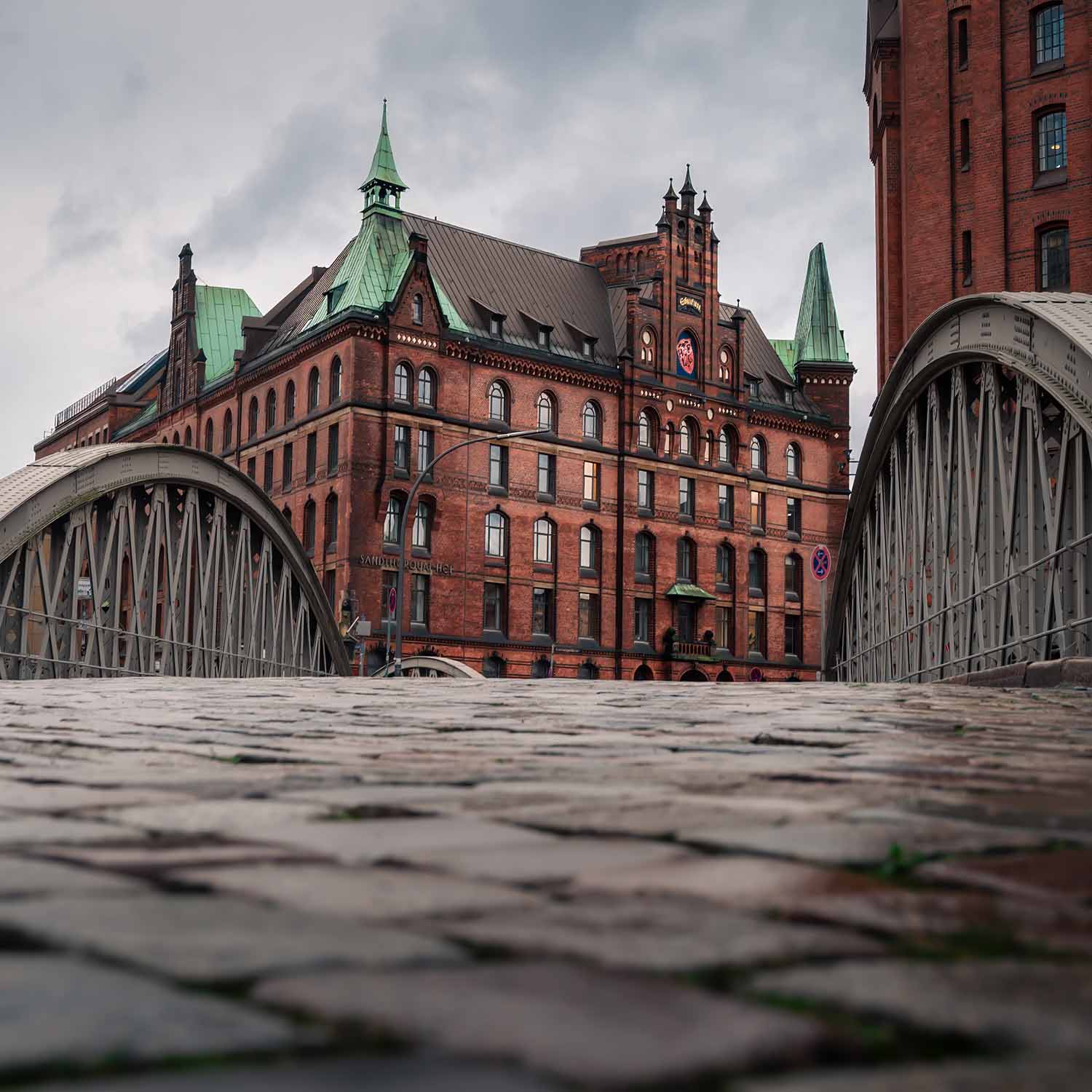
Walk the warehouse blocks and bridges. The classic views are red brick, green copper details, and water between the buildings. Morning light is kind to photographers; weekends get busy around Miniatur Wunderland and the plaza.
Look for the customs-border story. For 116 years, a customs line ran through the district. Guides on a paid tour will point to where that border mattered operationally; on your own, read plaques and notice how the urban plan separates "inside" from "outside."
End at the Elbphilharmonie plaza. The concert hall sits on the foundation of the old Kaispeicher A warehouse. Original budget: €77 million. Final cost: €866 million. Construction ran 2007–2017. Herzog & de Meuron placed a glass concert hall on the old red-brick base. It is Hamburg's most argued-about building and its most photographed silhouette.
HafenCity next door: from 2000, Hamburg built Europe's largest inner-city development on former port land beside the Speicherstadt (157 hectares, eventually 14,000 residents and 45,000 workers). Standing on the boundary between 19th-century warehouses and 21st-century apartments is the point: Hamburg keeps rebuilding on top of its port.
Practical watch-outs
- Cobblestones: the main routes are predominantly cobblestone. That is authentic and unavoidable. Pushchairs and wheelchairs can manage with care; do not expect smooth pavement throughout.
- Museums cost extra: Miniatur Wunderland, Dialog im Dunkeln, and others are separate tickets. A walking tour does not include entry.
- Weather: open bridges and canal edges get windy. Normal rain does not cancel outdoor walks; dress for Hamburg.
Speicherstadt vs Old Town: which first?
If you have one guided walk on a first visit, start with the Old Town walking tour. It answers why Hamburg looks like this: Hanseatic trade, the Great Fire of 1842, Rathaus, wartime rebuilding. About 2.5 hours, max 15 people, around €30 per person from Rathausmarkt.
Choose the Speicherstadt second when you already have the chronological frame and want architecture, UNESCO context, and the Elbphilharmonie story in one focused 2-hour walk. That is exactly what the Speicherstadt & Elbphilharmonie tour is built for. It is not a repeat of Old Town with different bricks.
Trying to do both as full guided tours on the same day usually feels rushed. Day one Old Town, day two Speicherstadt is the combination that works.
When a guided Speicherstadt tour is worth it
Self-guided wandering covers scenery. A good guide covers why the scenery exists:
- How the free-port exception shaped every facade
- Why the canals were load-bearing infrastructure, not ornament
- What happened when customs status ended in 2013
- How HafenCity relates to the warehouse city (and what Hamburg argued about)
Moin Hamburg Tours runs join-in Speicherstadt walks at about €30 per person, max 15 (usually 6–8), meeting at Messberg 1 by the Chocoversum entrance. Free cancellation up to 24 hours before. Languages: English, German, Spanish, one language per departure.
Same-day spots sometimes appear on the live calendar; book ahead in peak season.
Private option for groups
If you are six or more, need a flexible start (cruise timing, conference gap), or want Old Town and Speicherstadt blended into one route, compare join-in tickets with a private tour in Hamburg from €250 for up to 10 people. Private is not "VIP join-in." It is your schedule and your stops.
Bottom line
The Speicherstadt rewards visitors who connect warehouses, canals, customs law, and the Elbphilharmonie into one story. Walk it alone for the views; book the Speicherstadt tour when you want the machinery explained. Pair it with an Old Town walk on a separate day for the full Hamburg picture, or go private if your group needs both in one flexible block.
See today's departures or the Speicherstadt tour page for live availability.
PLAN YOUR VISIT
See Hamburg with a local guide
Small-group walking tours in English, German and Spanish — Old Town, St. Pauli, and Speicherstadt.
See our tours →